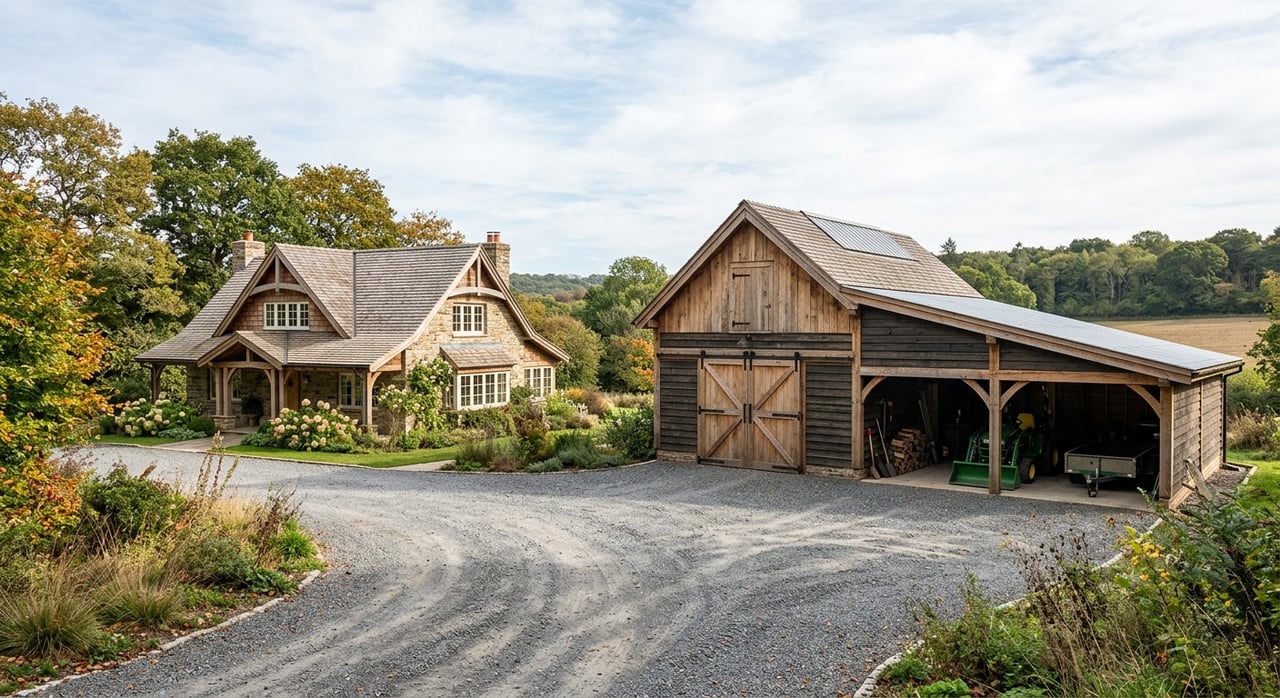
Buying An Acreage Near 100 Mile House: What To Know
April 9, 2026
April 9, 2026
Buying an acreage near 100 Mile House can feel like a dream move, but rural property comes with details that are easy to miss if you only focus on the land itself. You may be thinking about space for animals, privacy, a workshop, or a quieter Cariboo lifestyle, yet the real questions often come down to access, services, zoning, and long-term usability. If you want fewer surprises and more confidence before you buy, it helps to know what to verify early. Let’s dive in.
One of the first things to confirm is whether the property is inside the District of 100 Mile House or in the surrounding Cariboo Regional District. That distinction matters because the two areas handle services differently. The District maintains services like roads, water, sewer, storm infrastructure, emergency services, parks, trails, sidewalks, and permitting, while the CRD provides services through specific service areas rather than across the whole region, according to the District’s service overview.
If a property is in the CRD, land-use decisions are guided by official community plans and zoning rules. The CRD explains that if a proposed use does not fit the zoning or official community plan designation, a bylaw amendment and public hearing may be required, as outlined in its planning information. For buyers, that means you should never assume your future plans will be automatically allowed just because the parcel is large.
The South Cariboo planning framework is also designed to maintain rural character, protect watercourses, support road safety, and protect agricultural uses on land with agricultural potential. That matters if you are considering livestock, outbuildings, fencing, or subdivision. Acreage gives you options, but local rules still shape what is realistic.
If the property is in the Agricultural Land Reserve, agriculture is the priority use and non-agricultural uses are restricted. The Agricultural Land Commission says owners usually need approval for some non-farm uses or subdivision, and you can start by reviewing the ALR permitted uses guidance. This is one of the most important early checks for acreage buyers.
ALR status can affect how you use the land now and what flexibility you may have later. If you are hoping to build additional structures, change the use, or split the land, you will want a clear answer before moving forward. The ALC notes that its map tools are for general reference, and official confirmation should come from its mapping team.
With rural property, the visible driveway is not the same thing as guaranteed legal access. A title review can reveal easements, statutory rights of way, and restrictive covenants that may affect how you enter the property or where you place buildings and utilities. The Land Title and Survey Authority notes that a title search is best done using the 9-digit PID through its title search resources.
This step matters as much as the acreage count. A beautiful parcel can become much less practical if access is limited, shared, or subject to restrictions you did not expect. Reviewing title records early helps you understand the property on paper, not just in person.
Some rural properties are reached by roads that operate very differently from municipal streets. If access is via a forest service road, British Columbia states that it is not a public highway, and public use may depend on safety and environmental considerations. The province also notes in its forest service road guidance that maintenance does not necessarily include snow ploughing.
That can be a major issue in winter. Before you write an offer, confirm who maintains the road, whether ploughing is included, and how access is restored after heavy snow. If year-round access matters to you, this should be a non-negotiable part of your due diligence.
For raw land or future subdivision, access standards become even more important. BC’s rural subdivision guide says highway access is essential, access should generally be by a minimum-standard all-weather road, and Land Title Act standards must be met. The same resource notes that a 20-metre right-of-way is considered a minimum for proper road maintenance and future utilities.
Water is one of the biggest practical questions for acreage buyers near 100 Mile House. In many rural parts of the South Cariboo, properties are not connected to a community water system. The South Cariboo Official Community Plan states that most individual parcels rely on private wells, and the most common wastewater method is a septic tank and drain-field system, according to the South Cariboo OCP.
The CRD does operate some water and sewer utilities in small unincorporated communities, but service is limited to defined boundaries. As the CRD explains in its water and sewer permit information, properties outside a service area may still be able to connect in some cases, but often at additional cost. You do not want to assume a nearby line means easy service.
If the property has a well, BC recommends asking for:
These recommendations are outlined in the province’s guidance for buying property with a well. This is especially important if you are buying for animals, irrigation, or other land-intensive uses.
The OCP also notes that while a new well may be drilled without a groundwater licence, a licence is required before groundwater is used for non-domestic purposes. If your plans include irrigation or other uses beyond household needs, make sure you understand that extra step before closing.
Septic capacity matters more than many buyers realize. If you want to add bedrooms, build a secondary structure, or support a more intensive rural lifestyle, the existing system may not fit your future plans. BC states that septic systems must be designed, installed, repaired, or maintained by an authorized person under the onsite sewage system rules.
The CRD also notes that if a new home or added bedrooms are not connected to a community sewer system, a local health-authority permit may be required. The owner remains responsible for proper private sewage design and maintenance. In short, if the property depends on septic, it is worth confirming the system’s status and whether it aligns with how you plan to use the property.
If the acreage is within the District of 100 Mile House, permits are required for construction, additions, alterations, changes of use, or demolition. The District explains in its building permit information that permit review includes zoning, fire, and structural requirements, and water and sewer connection fees may apply.
Even outside the District, permitting and land-use approval still matter. The key takeaway is simple: if you are buying based on future plans, verify the approval path before you buy. That could include a shop, barn, extra dwelling space, or a different use than the current one.
Owning acreage in the South Cariboo means planning for the seasons, not just enjoying the scenery. Wildfire preparedness is part of rural ownership, and the CRD offers FireSmart education and home assessments to help owners reduce risk. FireSmart guidance focuses on reducing fuels near the home and creating a non-combustible zone immediately around structures.
Fire protection is also not uniform across the region. The South Cariboo OCP notes that coverage may come from district, volunteer, or First Nation fire protection depending on location. That makes it smart to ask detailed questions about local service levels and emergency response when comparing properties.
Winter is the other major reality check. Snow removal, driveway length, equipment needs, and road maintenance can all affect how easy a property is to live on full-time. In the Cariboo, lifestyle and logistics go hand in hand.
Acreage does not automatically mean every rural use will work. If you are shopping for a horse property, hobby farm, or future subdivision opportunity, you need to compare your plans against zoning, ALR status, access, water, and wastewater capacity. The local planning framework is intended to preserve rural character, reduce land-use conflicts, and protect agricultural land, as described by the CRD planning framework.
That is why the best acreage purchase is not always the biggest or cheapest one. It is the one that fits your goals with the fewest question marks. A careful review at the start can save you time, money, and frustration later.
Buying rural property is different from buying in town, and the details matter. If you want help comparing acreages near 100 Mile House, understanding the practical trade-offs, and finding a property that fits your lifestyle, connect with Your Cariboo Home Team. Let’s find your Cariboo home.
With Your Cariboo Home Team, you get more than a transaction. You get local expertise, honest advice, and real people who genuinely care — today, tomorrow, and ten years from now.
Get In Touch With Our Team To Learn More
96 Cariboo Hwy 100 Mile House, British Columbia V0K 2E0, Canada