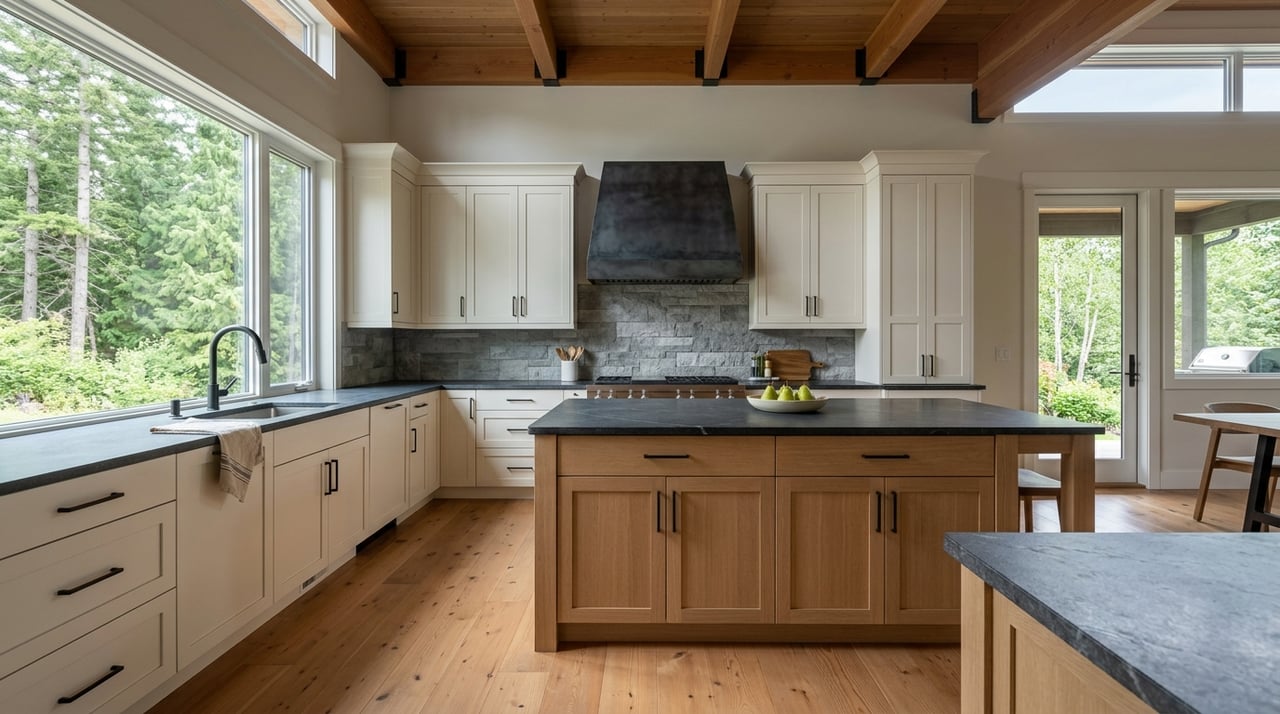
Selling Your 100 Mile House Home To Out-Of-Area Buyers
April 23, 2026
April 23, 2026
Wondering how to attract a buyer who lives hours away, or even in another part of the province? In 100 Mile House, that question matters more than many sellers realize. A large share of interest can come from people looking for a lifestyle change, a second home, or a rural property with features they cannot easily find in larger centres. If you want to sell well, your home needs to make sense to someone who cannot pop by on short notice. Let’s dive in.
100 Mile House has real pull for buyers coming from outside the area. The District describes it as the South Cariboo service hub on Highway 97, with more than 2 million vehicles passing through annually, a location between Kamloops and Prince George, and about a five-hour drive from Vancouver. The community also offers good cell coverage and high-speed internet, which matters to buyers balancing rural living with everyday convenience and remote work needs.
The area appeals to a wide range of lifestyle-driven buyers. According to the District, that includes retirees, families, recreation-focused buyers, remote workers, and people looking for more balance in their day-to-day life. The local draw is not just scenery. It is also about access to lakefront living, small acreages, trail networks, and a functioning regional economy tied to tourism, forestry, agriculture, business services, and log-home building.
That broader appeal can work in your favor as a seller. The South Cariboo Housing Needs Assessment notes that many seasonal visitors from the Lower Mainland and beyond spend time here, fall in love with the area, and later make a permanent move. In other words, your buyer may already be looking at 100 Mile House as a long-term lifestyle destination, not just a place on the map.
Out-of-area buyers usually make decisions with less in-person access and more digital research. That means your listing has to answer more questions upfront. If a local buyer might drive by, book a second showing, or ask around town, a remote buyer often decides whether to travel based on the quality of the online presentation alone.
This is not a small trend. NAR reporting shows that 43% of buyers started their home search on the internet, and many used virtual tours and virtual listings during the process. In a market where buyers are comparing homes from a distance, strong photos, video, floor plans, and clear property details can be the difference between a showing request and a skipped listing.
Remote buyers also tend to focus on practical details early. They want to know how the property lives, not just how it looks. That is especially true in 100 Mile House, where homes can range from in-town single-family properties to acreage, recreational homes, manufactured homes, and vacant land.
Pricing matters in every market, but it becomes even more important when you are trying to draw out-of-area attention. Buyers who are not local often compare your property against a wider set of options. If the price does not line up with the photos, condition, land features, and location, they may never book a visit.
The local market gives important context here. According to BC Northern Real Estate Board data, 100 Mile House recorded 420 MLS sales in 2025 worth $188.4 million, up from 374 sales worth $175.1 million in 2024. The median value of the 125 detached homes sold in 2025 was $515,000, up from $470,000 the year before.
At the same time, year-end active listings rose to 278 from 258, and the board noted that Northern BC markets were operating in more balanced conditions rather than an overheated seller's market. That means buyers have options. Strong pricing and strong presentation need to work together.
In 100 Mile House, buyers are often purchasing more than a house. They may be buying a lifestyle, a setup for hobbies, room for equipment, or a property with future use potential. That is why vague listing descriptions often underperform, especially with remote buyers.
The property type mix in this market is broad. In 2025, MLS activity included 125 single-family homes, 110 parcels of vacant land, 101 homes on acreage, 30 manufactured homes on land, 9 manufactured homes in parks, and 19 recreational properties, according to the BC Northern Real Estate Board. Statistics Canada also shows that single-detached homes made up 47.3% of occupied private dwellings in 2021, which reinforces that buyers are choosing among a range of housing forms, not one standard product.
Because of that, your listing should clearly explain what comes with the property and how it functions. For example, buyers often need details such as:
This kind of detail helps buyers picture everyday life before they ever arrive.
One of the fastest ways to lose an out-of-area buyer is to leave basic property questions unanswered. Buyers relocating from larger centres may not know what to expect from a rural or small-town property. They are looking for reassurance and clarity.
The District highlights that 100 Mile House has good cell coverage and high-speed internet, which is a strong starting point for remote workers and connected households. It also points to community infrastructure and services that support day-to-day living, including municipal water and sewer, emergency services, transit options through BC Transit and LDN Transportation, a recreation centre, and a downtown airport close to shops and hotels, as noted on the District’s local recreation and service information.
For your specific property, the listing should make clear:
The easier you make it for a buyer to understand day-to-day logistics, the more comfortable they will feel moving forward.
Out-of-area buyers are often interested in what they can do with a property, not just what it looks like today. That is especially true for acreage, hobby farm, vacant land, and mixed-use style opportunities. If your listing leaves zoning or use restrictions unclear, buyers may move on rather than try to decode it from a distance.
The District states that the Official Community Plan assigns land-use designations to all lands, while the zoning bylaw sets rules around permitted uses, density, parking, and even fence heights. You can point buyers toward the District’s Official Community Plan information and zoning resources, but your marketing should still explain the basics in plain English.
That might include whether a property is primarily residential, whether outbuildings are already in place, and whether there are obvious limits or possibilities a buyer should understand before viewing. Clear guidance saves time and builds trust.
For homes near forested areas or on acreage, wildfire resilience is not a side note. It is a practical concern many remote buyers will ask about right away. If you have completed FireSmart-related improvements, those details should be visible in your marketing.
The District’s FireSmart program and 2025 Community Wildfire Resiliency Plan frame wildfire mitigation as a shared community responsibility. That means buyers may respond positively to a property that already shows thoughtful maintenance and preparedness.
Examples worth mentioning include:
These details can help a remote buyer feel more confident about the property’s upkeep and long-term livability.
When your buyer is not local, your online listing is your first showing. It needs to do more than check the box. It needs to build confidence.
NAR’s 2025 technology survey found that 52% of REALTORS used drone photography or video, 38% used virtual tours, and 79% used eSignature tools, with 45% saying clients responded very positively to technology. NAR also notes that floor plans consistently improve buyer engagement, which is especially useful for someone trying to understand a home from afar.
For 100 Mile House sellers, that usually means your marketing should include:
This is where rural and lifestyle listings really benefit from thoughtful marketing. Acreage, waterfront, and specialty properties often need more context than an average suburban listing.
Out-of-area buyers are not just comparing square footage. They are also asking what life looks like once they move. That is why your marketing should show how the property connects to the wider 100 Mile House area.
NAR reports that buyers care strongly about neighborhood quality and convenience to friends and family. In a place like 100 Mile House, that often translates into questions about daily services, recreation, and access. The District points to features such as the recreation centre with nine months of ice, trail access, transit services, and the community’s role as a regional service hub.
Your listing should help buyers understand practical context like:
That type of context helps a buyer connect the dots between the home and the lifestyle they want.
Selling to out-of-area buyers is not about using more words. It is about using the right information, presented clearly, to answer questions before they become objections. In balanced market conditions, that matters.
If your home is in 100 Mile House, a strong strategy usually combines accurate pricing, polished digital presentation, practical property details, and local context that helps remote buyers feel informed. That is especially true for acreage, lake properties, hobby farms, and other lifestyle-driven listings where buyers may be coming from well outside the South Cariboo.
If you want help positioning your property for the right audience, connect with Your Cariboo Home Team. With local knowledge and polished marketing built for rural and lifestyle properties, you can present your home in a way that makes sense to buyers near and far.
With Your Cariboo Home Team, you get more than a transaction. You get local expertise, honest advice, and real people who genuinely care — today, tomorrow, and ten years from now.
Get In Touch With Our Team To Learn More

96 Cariboo Hwy 100 Mile House, British Columbia V0K 2E0, Canada